ServicesWater Softeners
Water Softeners in Murphy, Plumbed to Code
Not every home needs a softener. We check your hardness first, pick a unit that fits your water and the people using it, and have it put in with a bypass valve and an air-gapped drain line, set up the way plumbing code asks for.
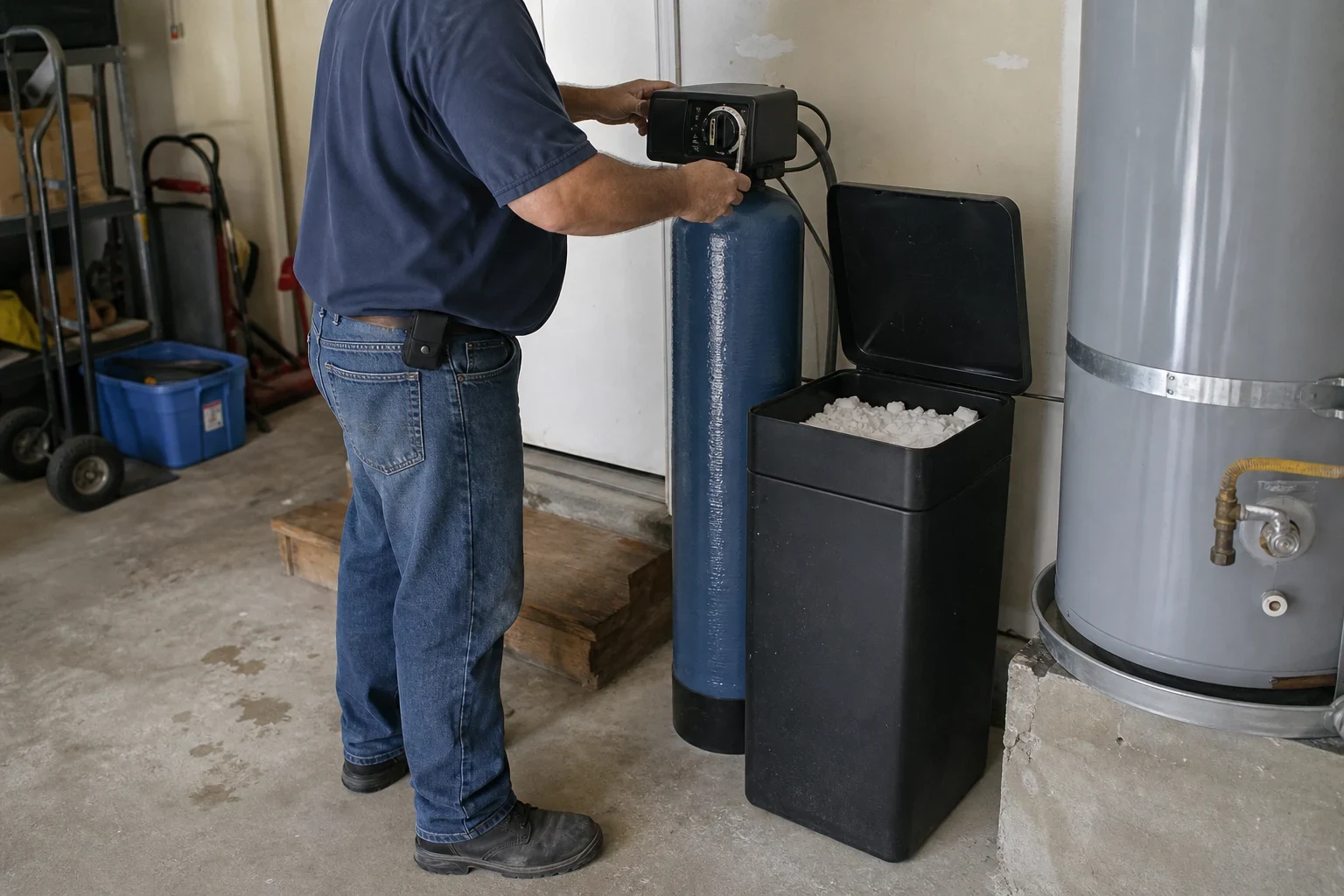
How a Softener Works and Who Needs One
Calcium and magnesium are what make water hard. When that water gets hot, the minerals drop out as scale, which shows up as white buildup on faucets and inside your water heater. A softener trades those minerals away in a tank of resin beads and then flushes the beads with brine on a set schedule.
Plenty of homes can do without one. Hardness differs from house to house, and a softener costs you salt, water and maintenance year after year. That's why we take a reading first. If it shows a softener will pay off, we size one for you. If whole-home filtration or a reverse osmosis system is the better answer, we say so.
How it's plumbed counts just as much as which unit you get. A softener connects to your main line and sends its rinse water down a drain. Get that drain wrong and dirty water can be drawn back into your supply. We set it up correctly from the start.
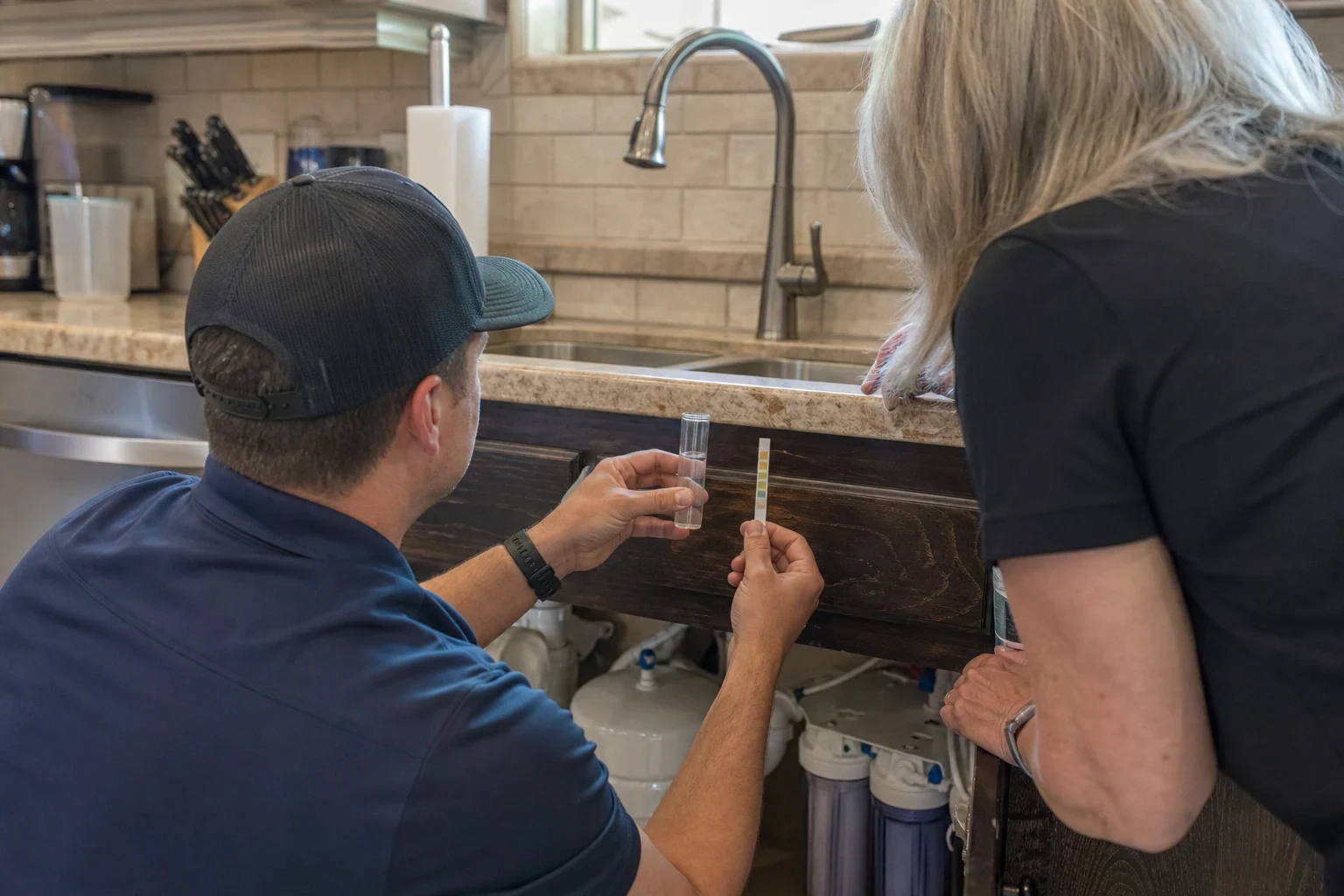
What Your Softener Install Includes
- 01
Sizing from your numbers
We pick grain capacity from your hardness number and your daily water use. Too small, and the unit runs its rinse cycle over and over and burns through salt. Too big, and it can go so long between cycles that the resin bed does not get refreshed the way it should.
- 02
Plumbing by the right hands
Installations are handled by subcontracted master-licensed plumbers. They tie into your main line, or into the softener loop if your garage already has one.
- 03
Bypass valve
Every install gets a bypass. You can shut the softener out of the line for service or a salt refill without cutting water to the house.
- 04
Code-correct drain and air gap
The rinse line runs to an approved drain through an air gap, so waste water can never siphon back into your drinking water. This is one of the first things an inspector looks at.
- 05
Setup and walkthrough
We program the control valve, load the first bags of salt, test the softened water and show you how to check the brine tank and use the bypass.
Questions about Water Softeners?
Call(972) 833-7500Signs Your Water Is Hard Enough for a Softener
White crust on fixtures
Chalky rings around faucets, showerheads and the glass door that come right back after you clean them.
Spotted glassware
Drinking glasses have a cloudy film or water spots after a wash, and adding rinse aid does not clear it up.
A noisy water heater
Popping or rumbling from the tank often means scale has settled on the bottom. It also makes the heater work harder.
Soap that will not lather
Shampoo and dish soap take more to foam, and laundry comes out stiff or dull.
An old softener that stopped working
If you still add salt but the crust keeps coming back, the resin or valve may be worn out. We will tell you whether a repair part or a new unit makes more sense.
How a Softener Job Goes
- 1
Water test
We check your hardness and look at your plumbing: where the main line enters, whether there is a loop, and where a drain and outlet sit.
- 2
Plain quote by phone
You get a quote that lists the unit, the plumbing work and any permit. If your city requires a permit for the tie-in, the plumber pulls it and we schedule any inspection.
- 3
Install day
Water goes off for a few hours at most. The plumber sets the tank, installs the bypass, runs the drain through an air gap and adds the brine tank overflow line. Floors get covered where we walk.
- 4
Check and handoff
We run a regeneration, test the softened water at a faucet and clean up. You get the settings written down and a quick lesson on salt.
How a Softener Quote Comes Together
Two things drive the number: the size of unit your water and family call for, and the amount of plumbing needed to connect it. If your garage already has a loop, the tie-in goes quickly. If the plumber must run fresh pipe to the main line, it takes longer. You hear the full price by phone before anything is installed.
- Your hardness level and household size
- The harder the water and the more people using it, the more work the softener does each day. A heavier load generally means a larger resin tank.
- Existing loop or fresh tie-in
- Many homes in the area were built with a softener loop in the garage, which makes the hookup simple. Without one, the plumber cuts into the main line and fits the connections.
- How close the drain and outlet are
- Every softener needs a drain with an air gap, and most control valves plug into a nearby outlet. If either sits far off, extending it adds labor.
- Control valve type
- A metered valve only regenerates when your household has used enough water, so it uses less salt over time. A simple timer valve costs less up front.
- Permit, where required
- If your city asks for a permit on this work, the quote already includes the fee and the inspector's visit.
Water Softener Questions
Do I really need a softener, or just a filter?
It depends on what your test shows. A softener handles hardness and scale. It does nothing for chlorine taste. If taste and odor are your main complaint, whole-home filtration is usually the better fit, and some homes end up with both.
Will softened water make my drinking water salty?
A softener adds a small amount of sodium as it removes hardness. Most people never taste it. If you want to limit it, a reverse osmosis system under the kitchen sink removes it from your drinking and cooking water.
What warranty comes with the softener?
We stand behind the installation with a 1-year workmanship warranty on installation-related defects. The manufacturer covers the equipment itself, with 5 years on valves and 10 years on tanks.
Why does the drain need an air gap?
The softener dumps rinse water during every regeneration. An air gap is an open space between the drain line and the drain, so dirty water can never be pulled back into your supply. Plumbing code requires it, and inspectors check it.
How much upkeep is there?
Lift the brine tank lid every few weeks and pour in a bag when the salt level runs low. Now and then a hard shelf of salt can form inside the tank, so poke it with a broom handle to break it up. On city water, the resin bed itself lasts many years.
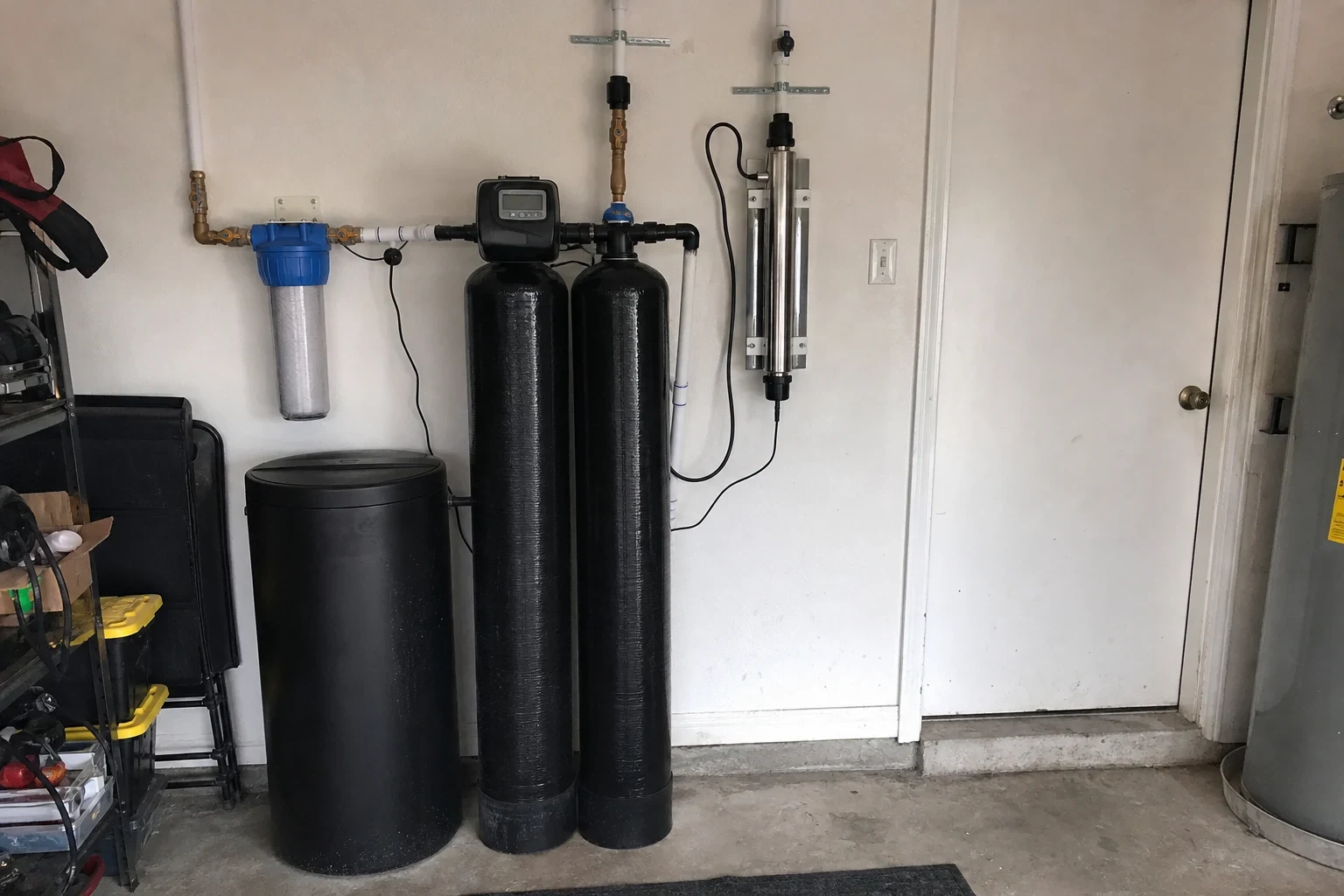
See Your Hardness Number Before You Buy
We start with a water test and a written water report, so you know what is in your water before you spend money on equipment. Standard professional installation is included for qualifying homes.